
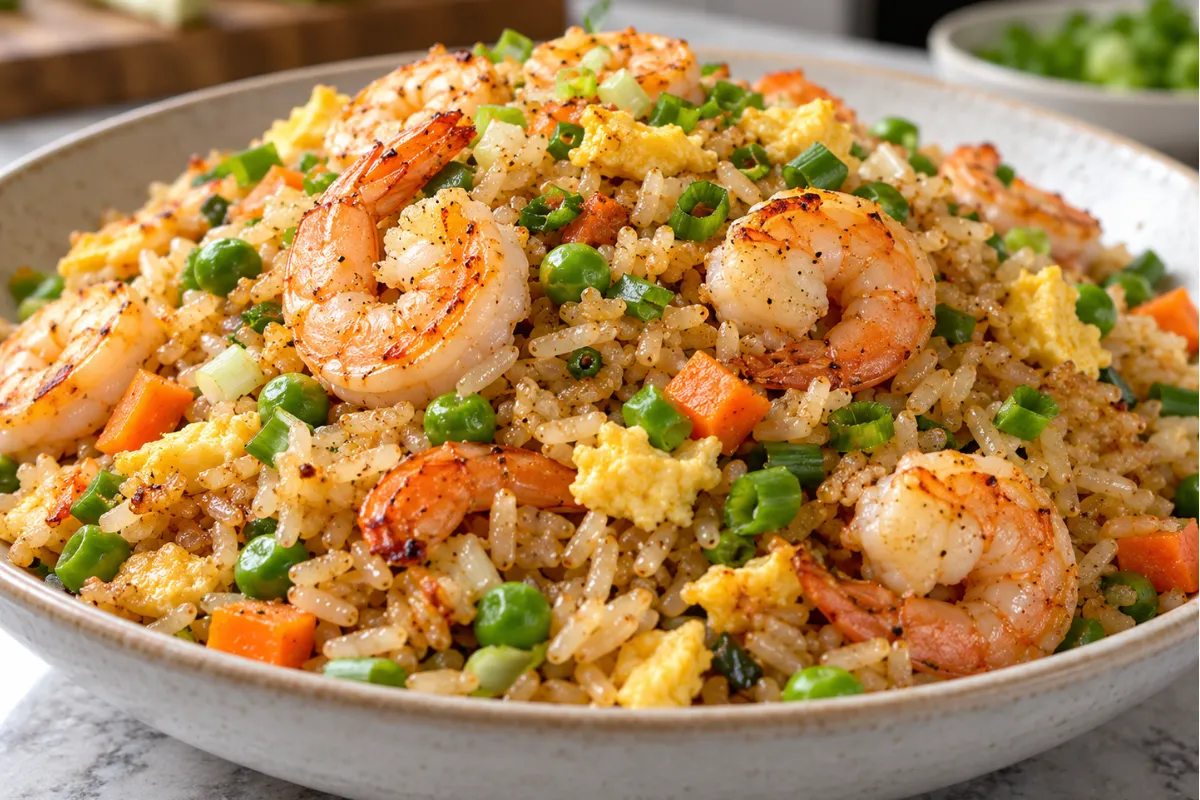
If you love Chinese-inspired takeout, this shrimp fried rice recipe is a delicious way to enjoy those familiar flavors at home. Made with juicy shrimp, fluffy rice, colorful vegetables, scrambled eggs, garlic, and a savory soy sauce mixture, this dish is satisfying, flavorful, and easy to prepare.
The best part is that you do not need any special ingredients or complicated cooking techniques. With leftover rice and a few everyday ingredients, you can prepare a restaurant-style meal in your own kitchen. It is perfect for a quick weeknight dinner, a simple lunch, or whenever you want to turn leftover rice into something special.
This homemade shrimp fried rice has a wonderful balance of savory, garlicky, and slightly smoky flavors. Each bite combines tender shrimp, soft scrambled eggs, sweet vegetables, and rice that soaks up all the delicious seasonings.
Recipe Information
- Recipe Name: Shrimp Fried Rice
- Cuisine: Chinese-inspired
- Course: Main Course, Lunch, Dinner
- Preparation Time: 10 minutes
- Cooking Time: 10 minutes
- Total Time: 20 minutes
- Servings: 4 people
- Difficulty: Easy
- Cooking Method: Stir-frying
- Dietary Notes: Contains shrimp, eggs, soy, and sesame if sesame oil is used.
Why You Will Love This Shrimp Fried Rice Recipe
- Quick and easy: This meal comes together in just 20 minutes, making it ideal for busy days.
- Full of flavor: Garlic, soy sauce, and sesame oil give the rice a delicious savory taste.
- Perfect for leftovers: Day-old rice works especially well and helps prevent soggy fried rice.
- A complete meal: Shrimp, eggs, rice, and vegetables provide a satisfying combination of ingredients.
- Easy to customize: You can adjust the vegetables, seasonings, and spice level to suit your taste.
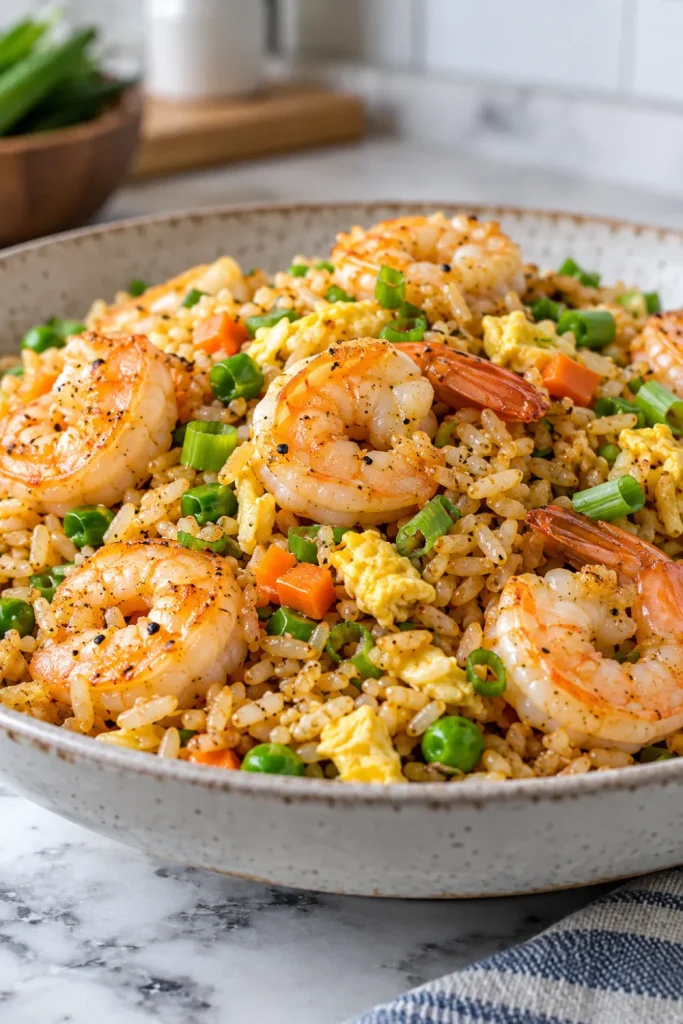
Ingredients for Shrimp Fried Rice
The secret to delicious shrimp fried rice is using simple ingredients and cooking them in the right order. Here is everything you need to make four servings.
Main Ingredients
- 3 cups cooked rice: Preferably cold, day-old rice. Long-grain rice or jasmine rice works particularly well.
- 300 g shrimp: Peeled and deveined, with tails removed if desired.
- 2 large eggs: Lightly beaten.
- 1 cup mixed vegetables: A combination of peas, carrots, and sweet corn works well.
- 3 green onions: Thinly sliced, with the white and green parts separated.
- 3 garlic cloves: Finely minced.
- 2 tablespoons neutral cooking oil: Such as vegetable, canola, or peanut oil.
For the Sauce and Seasoning
- 2 tablespoons soy sauce: Use regular or low-sodium soy sauce according to your preference.
- 1 teaspoon sesame oil: Adds a nutty aroma and classic fried rice flavor.
- 1/2 teaspoon ground black pepper: For mild heat and seasoning.
- 1/4 teaspoon salt: Adjust according to the saltiness of the soy sauce.
- 1/2 teaspoon grated fresh ginger: Optional, but it adds a lovely fresh flavor.
- 1/2 teaspoon chili flakes: Optional, if you prefer a spicy version.
You can also add a small splash of oyster sauce for a deeper, more savory flavor. If you do, reduce the soy sauce slightly to avoid making the rice too salty.
Equipment Needed
Gather these kitchen tools before you start cooking.
- Large wok or heavy skillet: Provides enough room to stir-fry the ingredients evenly.
- Cutting board: For preparing the garlic, vegetables, and green onions.
- Sharp knife: For chopping and slicing ingredients.
- Mixing bowl: For beating the eggs and mixing the sauce.
- Spatula or wooden spoon: For stirring the rice without crushing it.
- Measuring spoons and measuring cup: To measure the ingredients accurately.
- Small plate or bowl: To hold the cooked shrimp and scrambled eggs while preparing the remaining ingredients.
A wok is helpful, but a large skillet works perfectly well if that is what you have at home.
How to Make Shrimp Fried Rice
Follow these simple steps to make flavorful shrimp fried rice with tender shrimp and perfectly seasoned rice.
Step 1: Prepare the Rice and Ingredients
If you are using leftover rice, remove it from the refrigerator and break up any large clumps with a fork or clean hands. Cold rice is easier to stir-fry because it contains less surface moisture than freshly cooked rice.
If you are cooking rice specifically for this recipe, spread the cooked rice on a large plate or tray to release steam and cool it quickly. Refrigerate it promptly in a shallow container, and use it once chilled.
Pat the shrimp dry with paper towels. This helps them sear rather than release too much water into the pan.
Chop the garlic, slice the green onions, and prepare the mixed vegetables. Beat the eggs in a small bowl and mix the soy sauce, sesame oil, and black pepper in another bowl.
Having everything ready before you turn on the heat makes the cooking process much easier.
Step 2: Cook the Shrimp
Place a large wok or skillet over medium-high heat and add one tablespoon of cooking oil.
Once the oil is hot, add the shrimp in a single layer. Cook for approximately 1 to 2 minutes per side, depending on their size, until they turn pink and opaque and are cooked through.
Avoid overcrowding the pan. If necessary, cook the shrimp in batches to help them brown properly.
Transfer the cooked shrimp to a clean plate and set aside. Removing them from the pan prevents overcooking while you prepare the rice.
Step 3: Scramble the Eggs
Add a small amount of oil to the same pan if needed. Pour in the beaten eggs and allow them to sit for a few seconds before gently stirring with a spatula.
Cook until the eggs are just set but still soft. Break them into small pieces and transfer them to the plate with the shrimp.
Do not worry if the eggs are not completely firm at this stage. They will warm through when you combine everything at the end.
Step 4: Sauté the Garlic and Vegetables
Add the remaining tablespoon of oil to the wok. Add the white parts of the green onions, minced garlic, and optional ginger.
Stir-fry for about 30 seconds until fragrant. Keep the garlic moving so that it does not burn, as burnt garlic can make the rice taste bitter.
Add the mixed vegetables and cook for 2 to 3 minutes, stirring frequently. If you are using frozen vegetables, there is usually no need to thaw them first, but cook off any excess moisture before adding the rice.
The vegetables should be heated through while retaining some texture.
Step 5: Add the Rice
Add the cold rice to the wok. Use your spatula to break apart any remaining clumps and toss the rice with the vegetables.
Tasty and Delicious Recipes: Air Fryer Cookbook: 600 Effortless Air Fryer Recipes for Beginners and Advanced Users
Spread the rice across the hot surface for short intervals before stirring again. This helps the grains heat evenly and develop a lightly toasted flavor.
Cook for about 2 to 3 minutes, stirring frequently. If your pan is small, work in batches rather than crowding it. Too many ingredients in the pan can cause the rice to steam instead of fry.
At this stage, the rice should be hot, separated, and evenly mixed with the vegetables.
Step 6: Add the Sauce and Seasonings
Pour the soy sauce mixture around the sides of the hot wok rather than directly onto one pile of rice. Let it sizzle briefly, then toss everything together until the rice is evenly coated.
Taste the rice before adding extra salt because soy sauce already provides plenty of seasoning.
If you enjoy a little heat, add chili flakes or a small amount of chili sauce. For a richer, more savory flavor, you can add a little oyster sauce, keeping in mind that it may contain shellfish.
Continue stir-frying for another minute so that the flavors combine.
Step 7: Return the Shrimp and Eggs to the Pan
Add the cooked shrimp and scrambled eggs back to the wok. Toss gently with the rice and vegetables until everything is evenly distributed and heated through.
Sprinkle in the green parts of the sliced green onions and give everything one final stir.
Check that the shrimp are fully cooked and the entire dish is piping hot. Remove the pan from the heat as soon as everything is ready.
Step 8: Serve and Enjoy
Transfer the shrimp fried rice to serving bowls or plates. Garnish with additional green onions, a pinch of black pepper, or sesame seeds if desired.
Serve immediately while the rice is hot and fragrant. You can enjoy it on its own or pair it with a light soup, stir-fried greens, or your favorite Asian-inspired side dish.
Tips for the Best Shrimp Fried Rice
A few simple techniques can make a noticeable difference in the texture and flavor of your homemade fried rice.
1. Use Cold, Day-Old Rice
Cold rice is one of the most important ingredients for good fried rice. Freshly cooked rice is often moist and sticky, which can make the finished dish clumpy. Chilled rice generally separates more easily and fries better.
2. Keep the Pan Hot
Fried rice benefits from high heat because it helps remove excess moisture and lightly toast the grains. Preheat the wok or skillet before adding the ingredients, and avoid overcrowding it.
3. Do Not Overcook the Shrimp
Shrimp cook quickly and can become rubbery if left on the heat too long. Cook them until pink and opaque, remove them from the pan, and return them at the end.
4. Add Soy Sauce Gradually
Too much soy sauce can overpower the shrimp and make the rice soggy or overly salty. Start with the recommended amount, taste, and add more only if needed.
5. Prepare Everything Before Cooking
Stir-frying moves quickly. Chopping vegetables, measuring sauces, and preparing the shrimp in advance help prevent ingredients from burning while you search for the next item.
6. Adjust the Recipe to Your Taste
You can add mushrooms, bell peppers, finely chopped cabbage, or bean sprouts. For extra protein, increase the shrimp or add more egg. If you prefer a little sweetness, a small amount of sweet corn works well.
What to Serve with Shrimp Fried Rice
Shrimp fried rice can be served as a complete meal, but it also pairs nicely with a few simple side dishes.
- Stir-fried vegetables: Broccoli, bok choy, or green beans add freshness and crunch.
- Egg drop soup: A warm, light soup makes the meal feel more complete.
- Asian cucumber salad: Fresh cucumber with a tangy dressing balances the savory rice.
- Spring rolls: Crispy vegetable or shrimp spring rolls make a delicious addition.
- Steamed broccoli: A simple, nutritious side that does not compete with the main dish.
For a quick dinner, serve the rice with steamed vegetables and a wedge of lemon or lime for a fresh finish.
Variations of Shrimp Fried Rice
One of the best things about this recipe is how easily you can adapt it to suit different preferences.
Spicy Shrimp Fried Rice
Add chili flakes, fresh chopped chilies, or your favorite chili sauce while stir-frying the rice. You can adjust the amount depending on how much heat you enjoy.
Garlic Shrimp Fried Rice
If you love garlic, add one or two extra cloves. You can also finish the dish with a small drizzle of garlic-infused oil for a stronger garlic flavor.
Vegetable Shrimp Fried Rice
Increase the amount of vegetables by adding mushrooms, bell peppers, broccoli florets, or shredded cabbage. Chop the vegetables into small pieces so they cook quickly and mix easily with the rice.
Pineapple Shrimp Fried Rice
For a sweet and savory variation, add small chunks of pineapple near the end of cooking. The sweetness contrasts nicely with the salty soy sauce and shrimp.
Low-Sodium Shrimp Fried Rice
Use low-sodium soy sauce, skip the additional salt, and season with garlic, ginger, black pepper, and green onions. You can also use a small squeeze of lemon or lime to brighten the flavor.
Brown Rice Shrimp Fried Rice
Replace white rice with cooked brown rice for a nuttier flavor and a chewier texture. Make sure the brown rice is chilled before stir-frying.
How to Store and Reheat Shrimp Fried Rice
Shrimp fried rice is best enjoyed fresh, but leftovers can be stored safely if handled properly.
Storing in the Refrigerator
Transfer leftovers to a shallow, airtight container and refrigerate promptly, ideally within one hour for rice dishes. Do not leave cooked rice at room temperature for an extended period, as bacteria can grow and some toxins may not be destroyed by reheating.
For best food safety, use refrigerated leftovers within 24 hours, particularly because the dish contains cooked rice and seafood.
Reheating on the Stove
Add the leftover rice to a skillet with a small splash of water. Stir frequently over medium heat until the rice is steaming hot throughout. Avoid adding too much water, which can make the rice soft.
Reheating in the Microwave
Place a portion in a microwave-safe container and sprinkle a little water over it. Cover loosely, heat until steaming hot throughout, and stir halfway through for even heating.
Only reheat the portion you plan to eat, and avoid repeatedly cooling and reheating the same batch.
Can You Freeze Shrimp Fried Rice?
Freezing is possible if the rice was cooled and frozen promptly after cooking. Divide it into individual portions in freezer-safe containers and thaw in the refrigerator before reheating, or reheat directly from frozen if your method allows it. Always ensure the food is thoroughly heated before serving.
Common Mistakes to Avoid
Even a simple fried rice recipe can turn out less than perfect if a few key details are overlooked.
- Using wet rice: Excess moisture can make the rice mushy. Use chilled rice and remove any excess moisture from the ingredients.
- Crowding the wok: Too many ingredients lower the pan temperature. Cook in batches if necessary.
- Adding all the ingredients at once: Cooking the shrimp and eggs separately gives you better control over their texture.
- Over-seasoning: Soy sauce is salty, so taste before adding extra salt.
- Overcooking the shrimp: Cook until just done and return them to the rice at the end.
- Using too much oil: A little oil helps separate the grains, but excessive oil can make the dish greasy.
Avoiding these mistakes will help you achieve flavorful rice with distinct grains, tender shrimp, and evenly cooked vegetables.
Nutrition Information
The following nutrition table provides an approximate estimate for one serving of shrimp fried rice, assuming the recipe makes four servings and uses the listed ingredients.
| Nutrient | Approximate Amount per Serving |
|---|---|
| Calories | 420 kcal |
| Protein | 28 g |
| Carbohydrates | 49 g |
| Total Fat | 11 g |
| Saturated Fat | 2 g |
| Fiber | 3 g |
| Total Sugars | 3 g |
| Sodium | 850 mg |
| Cholesterol | 210 mg |
Nutrition values are estimates and may vary depending on the type of rice, size of the shrimp, amount of oil, soy sauce brand, and vegetables used. Actual values can be higher or lower depending on your ingredients and portion sizes.
Frequently Asked Questions (FAQs)
1. Can I make shrimp fried rice with freshly cooked rice?
Yes, you can use freshly cooked rice, but it may be stickier than chilled rice. Spread it in a thin layer on a tray to release steam and cool it quickly. Refrigerate it promptly in a shallow container before using it. Cold, properly stored rice generally produces better fried rice because the grains separate more easily.
2. What is the best rice for shrimp fried rice?
Long-grain white rice and jasmine rice are excellent choices because their grains tend to remain separate after cooking. Medium-grain rice can also work, although it may be slightly stickier. Brown rice is another option if you prefer a nuttier flavor and more chew.
3. Can I use frozen shrimp?
Absolutely. Frozen shrimp are convenient and work very well in this recipe. Thaw them in the refrigerator overnight or in a sealed bag under cold running water. Pat them dry before cooking to prevent excess moisture from collecting in the pan.
4. How do I keep shrimp fried rice from getting soggy?
Use chilled rice, dry the shrimp before cooking, and make sure your wok or skillet is hot. Avoid overcrowding the pan, and cook off excess moisture from frozen vegetables before adding the rice. Adding the sauce gradually also helps keep the grains from becoming wet.
5. Can I make shrimp fried rice without eggs?
Yes. Simply omit the eggs and follow the remaining steps as written. You can add extra vegetables or a little more shrimp to make up for the omitted ingredient.
6. Can I make this recipe gluten-free?
Yes, with a few adjustments. Replace regular soy sauce with certified gluten-free tamari or gluten-free soy sauce, and check the labels of any additional sauces you use. Some oyster sauces and premade seasonings may contain gluten.
7. Is shrimp fried rice healthy?
Shrimp fried rice can be part of a balanced diet. Shrimp and eggs provide protein, while rice supplies carbohydrates and vegetables contribute fiber and micronutrients. To make it lighter, use less oil, add extra vegetables, and choose low-sodium soy sauce.
8. Can I use a regular frying pan instead of a wok?
Yes. A large, heavy skillet works well for home cooking. Make sure it is preheated, and cook in batches if necessary. The goal is to keep the ingredients moving and allow moisture to evaporate rather than letting the rice steam.
9. What can I use instead of sesame oil?
You can omit sesame oil or use a small amount of another cooking oil. Sesame oil provides a distinctive nutty aroma, so the flavor will be slightly different without it. You can still achieve a delicious result with garlic, ginger, soy sauce, and green onions.
10. How long does shrimp fried rice take to cook?
This recipe takes approximately 10 minutes to prepare and 10 minutes to cook, for a total of 20 minutes. The timing assumes that the rice is already cooked and chilled and that the shrimp are peeled and deveined.
11. Can I prepare shrimp fried rice ahead of time?
You can prepare the ingredients in advance by chopping the vegetables, measuring the sauce, and cleaning the shrimp. For the best texture and food safety, cook the rice and shrimp properly, refrigerate them promptly, and stir-fry the dish when you are ready to eat. Avoid leaving cooked rice at room temperature for long periods.
12. What sauces go well with shrimp fried rice?
Soy sauce is the main seasoning in this recipe. You can also add a small amount of oyster sauce for extra savory flavor, chili sauce for heat, or a squeeze of lemon or lime for freshness. Add sauces gradually so that they do not overwhelm the shrimp or make the rice too salty.