
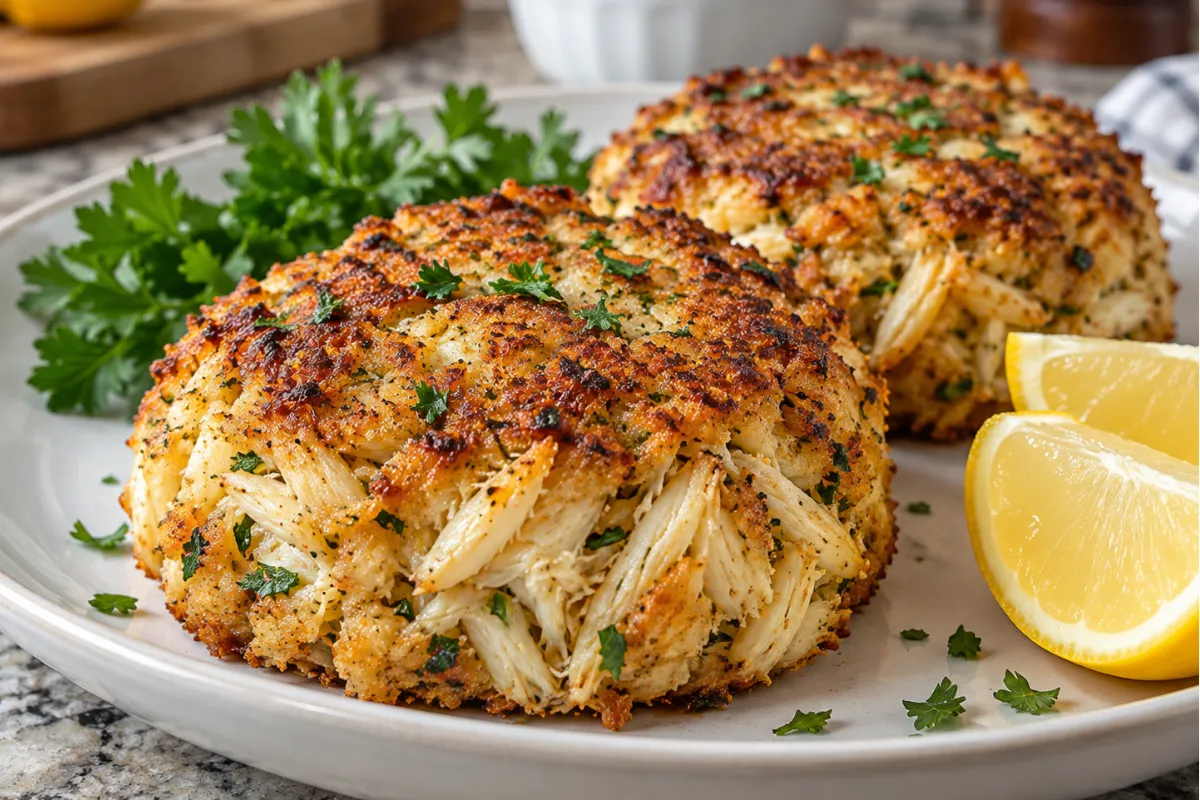
If you love fresh seafood with a delicate, sweet flavor, this Maryland Crab Cakes Recipe is one to add to your collection. These classic crab cakes are packed with tender crab meat, lightly seasoned with Old Bay seasoning, and held together with just enough breadcrumbs and mayonnaise to keep every bite moist and flavorful.
Traditional Maryland-style crab cakes focus on the crab meat rather than heavy fillers. The goal is to let the natural sweetness of the crab shine through while adding a touch of tanginess from Dijon mustard, a little lemon juice, and the unmistakable flavor of Old Bay seasoning.
This homemade recipe is simple enough for a weeknight dinner but special enough to serve at a family gathering, summer cookout, or seafood dinner party. Pan-frying gives the crab cakes a beautifully golden crust while keeping the inside soft and tender.
Whether you serve them with lemon wedges, tartar sauce, or a fresh green salad, these Maryland crab cakes bring the taste of a classic Chesapeake Bay seafood dish right to your table.
Maryland Crab Cakes Recipe at a Glance
- Preparation Time: 20 minutes
- Chilling Time: 30 minutes
- Cooking Time: 12 to 16 minutes
- Total Time: Approximately 1 hour and 10 minutes
- Servings: 4 people
- Yield: 8 medium crab cakes
- Cooking Method: Pan-frying
- Cuisine: American, Maryland-style seafood
- Difficulty: Easy to moderate
Why You Will Love This Maryland Crab Cakes Recipe
- Full of crab flavor: The recipe uses plenty of crab meat with minimal filler.
- Crispy and tender: Pan-frying creates a golden crust while keeping the center moist.
- Easy to prepare: Simple ingredients and straightforward steps make this recipe beginner-friendly.
- Perfect for different occasions: Serve these crab cakes as an appetizer, lunch, or main course.
- Classic seasoning: Old Bay, Dijon mustard, and fresh lemon juice complement the natural sweetness of the crab.

Ingredients for Maryland Crab Cakes
The secret to flavorful Maryland crab cakes is using good-quality crab meat and avoiding too many breadcrumbs. Each ingredient has a purpose, from adding moisture to enhancing the natural seafood flavor.
Main Ingredients
- 1 pound (450 g) lump crab meat, picked over for shells
- 1 large egg
- 1/4 cup mayonnaise
- 1 teaspoon Dijon mustard
- 1 teaspoon Worcestershire sauce
- 1 teaspoon Old Bay seasoning
- 1 teaspoon fresh lemon juice
- 1 tablespoon finely chopped fresh parsley
- 1/2 cup fine breadcrumbs or crushed saltine crackers, divided as needed
- 1 tablespoon butter
- 1 tablespoon neutral cooking oil
- Lemon wedges, for serving
Ingredient notes:
Crab meat: Lump crab meat is ideal because it has a sweet flavor and large, tender pieces. Jumbo lump crab meat also works if you want especially large chunks. Fresh pasteurized crab meat is a convenient option.
Mayonnaise: This helps bind the mixture and keeps the crab cakes moist. Use a full-fat mayonnaise for a rich texture.
Old Bay seasoning: This classic seafood seasoning gives the crab cakes their familiar Maryland-style flavor. If your seasoning is particularly salty, adjust the amount to taste.
Breadcrumbs: Use just enough to help the crab cakes hold their shape. Adding too much can make them dry and dense.
Lemon juice: A little acidity balances the richness of the mayonnaise and enhances the crab’s natural sweetness.
Equipment Needed
You will need the following kitchen equipment to prepare this recipe:
- Large mixing bowl
- Small bowl for mixing the binding ingredients
- Whisk or fork
- Rubber spatula or large spoon
- Measuring cups and spoons
- Fine strainer or clean paper towels, if needed to drain excess liquid
- Large nonstick or stainless-steel skillet
- Wide spatula for turning the crab cakes
- Plate or shallow tray for chilling the crab cakes
- Refrigerator
- Paper towels for draining excess oil
How to Make Maryland Crab Cakes
Follow these steps to make crab cakes that hold together well without losing their delicate texture.
Step 1: Prepare the Crab Meat
Place the crab meat in a large bowl and carefully check it for any remaining shell fragments or cartilage. If the crab meat contains excess liquid, drain it gently.
Try not to break up the larger pieces of lump crab meat. Keeping those pieces intact gives the finished crab cakes a tender texture and makes every bite more satisfying.
Step 2: Prepare the Binding Mixture
In a separate bowl, whisk together the egg, mayonnaise, Dijon mustard, Worcestershire sauce, Old Bay seasoning, lemon juice, and chopped parsley.
Mix until the ingredients are evenly combined. This mixture adds moisture, seasoning, and enough binding power to help the crab cakes stay together during cooking.
Step 3: Combine the Ingredients
Pour the binding mixture over the crab meat. Add about 1/4 cup of the breadcrumbs or crushed crackers and gently fold everything together using a spatula.
Avoid stirring vigorously. You want the crab meat to remain in recognizable chunks rather than turning into a paste.
If the mixture feels too loose to shape, add a little more breadcrumbs, one tablespoon at a time. The mixture should be moist but firm enough to form into patties.
Step 4: Shape the Crab Cakes
Divide the mixture into eight equal portions. Shape each portion into a patty approximately 2 to 3 inches wide and about 3/4 inch thick.
Handle the mixture gently and avoid pressing the patties too firmly. Lightly formed crab cakes tend to have a softer, more delicate interior.
Place the patties on a plate or tray.
Step 5: Chill the Crab Cakes
Cover the patties and refrigerate them for at least 30 minutes.
Chilling helps the ingredients firm up and allows the crab cakes to hold their shape when they are transferred to the hot skillet. This step is especially helpful when working with delicate lump crab meat.
Tasty and Delicious Recipes: Air Fryer Cookbook: 600 Effortless Air Fryer Recipes for Beginners and Advanced Users
Step 6: Heat the Skillet
Place a large skillet over medium heat. Add the butter and cooking oil.
Allow the butter to melt and the pan to become hot, but do not let the butter burn. The combination of butter and oil provides flavor while helping the crab cakes develop a golden-brown crust.
Step 7: Cook the Crab Cakes
Carefully place the chilled crab cakes in the skillet, leaving a little space between them. Work in batches if your skillet is too small.
Cook for approximately 4 to 5 minutes on the first side, until the bottoms are golden brown and the patties feel firm enough to turn.
Using a wide spatula, gently flip each crab cake. Cook the other side for another 4 to 5 minutes, or until evenly browned and heated through.
The exact cooking time depends on the thickness of the patties and the temperature of your skillet. For food safety, cook seafood dishes containing egg to an internal temperature of 165°F (74°C).
Step 8: Drain and Serve
Transfer the cooked crab cakes to a plate lined with paper towels to absorb any excess oil.
Let them rest for a minute or two before serving. Add fresh lemon wedges and your favorite dipping sauce.
Serve the crab cakes while they are warm, when the exterior is crisp and the interior is tender.
Tips for Making the Best Maryland Crab Cakes
A few simple techniques can make a noticeable difference in the final result.
1. Use high-quality crab meat. Since crab is the main ingredient, its flavor and texture have the greatest impact on the finished dish.
2. Do not overmix. Fold the ingredients together gently to preserve the large pieces of crab meat.
3. Keep the filler to a minimum. Too many breadcrumbs can overpower the crab and make the cakes dense.
4. Chill before frying. Refrigerating the patties helps them remain intact when you flip them.
5. Use medium heat. Excessively high heat can brown the outside before the center is heated through.
6. Avoid overcrowding the skillet. Cooking in batches helps maintain a consistent temperature and encourages even browning.
7. Flip only once when possible. Crab cakes are delicate, so turning them repeatedly increases the chance of breaking them apart.
What to Serve with Maryland Crab Cakes
Maryland crab cakes pair well with fresh vegetables, crisp salads, and classic seafood sides. Choose lighter accompaniments to let the crab remain the star of the meal.
Here are some delicious serving ideas:
- Tartar sauce: A creamy, tangy dipping sauce that complements the crab.
- Lemon wedges: Fresh lemon juice brightens the flavor.
- Coleslaw: Crisp cabbage adds a refreshing contrast to the warm crab cakes.
- Roasted potatoes: A satisfying side for a complete dinner.
- Corn on the cob: A classic summer accompaniment.
- Green salad: Mixed greens with a light vinaigrette provide a fresh balance.
- Steamed asparagus: A simple vegetable side that works well with seafood.
For a traditional seafood-inspired meal, serve the crab cakes with coleslaw, corn on the cob, lemon wedges, and tartar sauce.
Recipe Variations
Although the classic Maryland-style approach keeps the crab flavor front and center, you can adapt the recipe to suit your preferences.
Baked Maryland Crab Cakes
For a less hands-on cooking method, preheat the oven to 400°F (200°C). Place the chilled crab cakes on a lightly greased baking sheet and brush the tops with a little melted butter or oil. Bake for approximately 15 to 20 minutes, turning carefully if desired, until golden and cooked through.
The texture will be slightly different from pan-fried crab cakes, with a less pronounced crust.
Spicy Crab Cakes
Add a small pinch of cayenne pepper or a few drops of hot sauce to the binding mixture. Start with a small amount so the heat does not overwhelm the natural sweetness of the crab.
Gluten-Free Crab Cakes
Replace the regular breadcrumbs with certified gluten-free breadcrumbs or finely crushed gluten-free crackers. Check the labels on the Worcestershire sauce and seasoning as well if you need to avoid gluten strictly.
Crab Cake Sandwiches
Place a warm crab cake on a toasted bun with lettuce, tomato, and a little tartar sauce. A soft brioche bun works particularly well, though any sturdy sandwich roll is suitable.
How to Store and Reheat Maryland Crab Cakes
Storing Leftovers
Allow the cooked crab cakes to cool slightly, then place them in an airtight container in the refrigerator. Refrigerate within two hours of cooking and consume within 3 to 4 days.
Freezing Crab Cakes
You can freeze uncooked or cooked crab cakes. Arrange them in a single layer until firm, then transfer them to a freezer-safe container with parchment paper between the layers.
For the best quality, use frozen crab cakes within about 2 to 3 months. Thaw them in the refrigerator before reheating or cooking, and avoid leaving seafood at room temperature to thaw.
Reheating
For a crisp exterior, reheat crab cakes in a skillet over medium-low heat with a small amount of oil or butter. You can also warm them in a 350°F (175°C) oven until heated through.
Avoid prolonged microwave heating because it can make the texture soft and uneven. When reheating leftovers, make sure the center reaches 165°F (74°C).
Nutrition Information for Maryland Crab Cakes
The following nutrition information is an estimate for one crab cake, assuming the recipe makes eight crab cakes. Actual values will vary depending on the crab meat, mayonnaise, breadcrumbs, and amount of oil absorbed during cooking.
| Nutrient | Approximate amount per crab cake |
|---|---|
| Calories | 145 kcal |
| Protein | 13 g |
| Total carbohydrates | 5 g |
| Total fat | 8 g |
| Saturated fat | 2 g |
| Cholesterol | 80 mg |
| Sodium | 420 mg |
| Dietary fiber | 0.3 g |
| Total sugars | 0.5 g |
These crab cakes provide protein from crab meat, along with fat from the mayonnaise and cooking ingredients. Sodium can vary considerably depending on the seasoning and whether the crab meat is fresh or packaged.
For a more complete meal, pair two crab cakes with vegetables or a fresh salad.
Frequently Asked Questions
1. What makes Maryland crab cakes different from regular crab cakes?
Maryland-style crab cakes are known for highlighting the natural flavor of crab meat. They generally use minimal filler, with seasonings such as Old Bay, mustard, and Worcestershire sauce adding flavor without overpowering the seafood.
2. Can I use canned crab meat for this recipe?
Yes, you can use canned crab meat if fresh or pasteurized lump crab meat is unavailable. Choose a good-quality product, drain it well, and check carefully for shell fragments. The texture may be softer than that of fresh lump crab meat.
3. Why are my crab cakes falling apart?
Crab cakes may fall apart if the mixture is too wet, contains too little binder, or has not been chilled long enough. Add breadcrumbs gradually if needed, refrigerate the patties for at least 30 minutes, and turn them carefully with a wide spatula.
4. Is it better to fry or bake Maryland crab cakes?
Both methods work well. Pan-frying creates a crisp, golden exterior and is a popular choice for classic crab cakes. Baking is convenient when you want to cook several patties at once with less active attention.
5. Can I prepare crab cakes ahead of time?
Yes. You can mix and shape the crab cakes a day ahead, cover them, and refrigerate them until you are ready to cook. Keep them properly chilled and cook within 24 hours for the best quality.
6. Can I make Maryland crab cakes without Old Bay seasoning?
Yes. You can use a seafood seasoning blend with paprika, celery salt, black pepper, and a small amount of cayenne. The flavor will differ from the classic Maryland version, but the crab cakes can still be delicious.
7. How do I know when crab cakes are cooked?
The crab cakes should have a golden-brown exterior and a hot, firm center. Because this recipe contains egg, use a food thermometer to verify an internal temperature of 165°F (74°C).
8. What is the best sauce to serve with Maryland crab cakes?
Tartar sauce is a classic option. Lemon mayonnaise, remoulade, or a simple mixture of mayonnaise and lemon juice also pairs well with crab cakes. Serve the sauce on the side so everyone can add the amount they prefer.
9. Can I freeze homemade Maryland crab cakes?
Yes. Freeze shaped, uncooked patties on a tray before transferring them to a freezer-safe container. You can also freeze cooked crab cakes after cooling them promptly. Thaw in the refrigerator and cook or reheat thoroughly.
10. What type of crab meat is best for Maryland crab cakes?
Lump crab meat is an excellent choice because it offers a sweet flavor and a tender texture while holding its shape. Jumbo lump crab meat is another good option for larger pieces, while backfin crab meat can work well as a more economical alternative.