
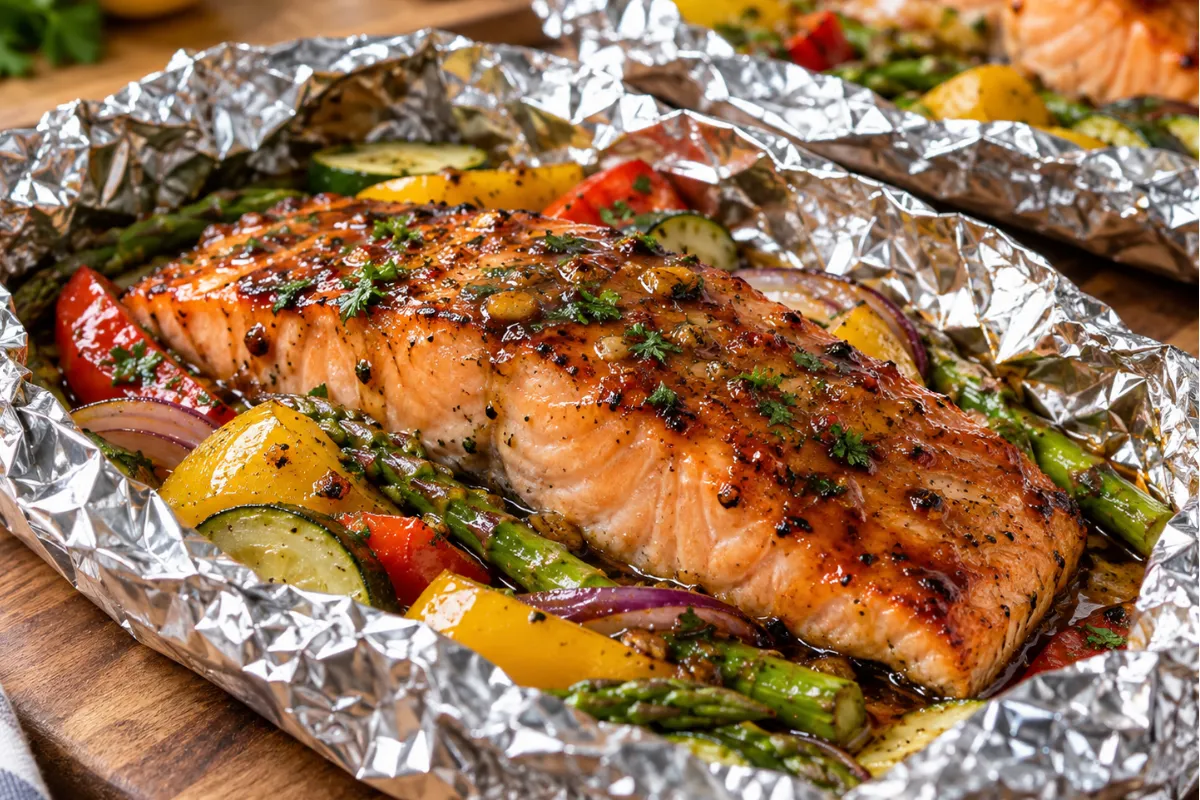
If you are looking for an easy, flavorful, and healthy dinner that requires minimal cleanup, this Honey Glazed Salmon Foil Packets Recipe is a wonderful choice. Tender salmon fillets are coated in a sweet and savory honey garlic glaze, wrapped in foil, and baked until moist, flaky, and full of flavor.
The combination of honey, garlic, soy sauce, fresh lemon juice, and a touch of butter creates a delicious glaze that complements the natural richness of salmon. As the fish cooks inside the foil packets, the flavors blend together, helping keep the salmon tender and juicy.
This recipe is perfect for busy weeknights, family dinners, summer grilling, or meal preparation when you want something delicious without spending hours in the kitchen. You can also add your favorite vegetables to each packet to make it a complete meal.
Recipe Information
- Recipe Name: Honey Glazed Salmon Foil Packets
- Preparation Time: 10 minutes
- Cooking Time: 15 to 20 minutes
- Total Time: 25 to 30 minutes
- Servings: 4
- Yield: 4 salmon foil packets
- Cuisine: American-inspired
- Course: Main Course, Dinner
- Cooking Method: Baking or grilling
- Difficulty: Easy
Why You Will Love This Recipe
- Quick and easy: The recipe requires just a few minutes of preparation and cooks in about 20 minutes.
- Sweet and savory flavor: Honey, garlic, soy sauce, and lemon create a balanced, flavorful glaze.
- Moist and tender salmon: Foil helps retain moisture while the fish cooks.
- Minimal cleanup: Each serving cooks in its own foil packet, reducing the number of dishes to wash.
- Easy to customize: Add vegetables, adjust the sweetness, or include a little chili for heat.
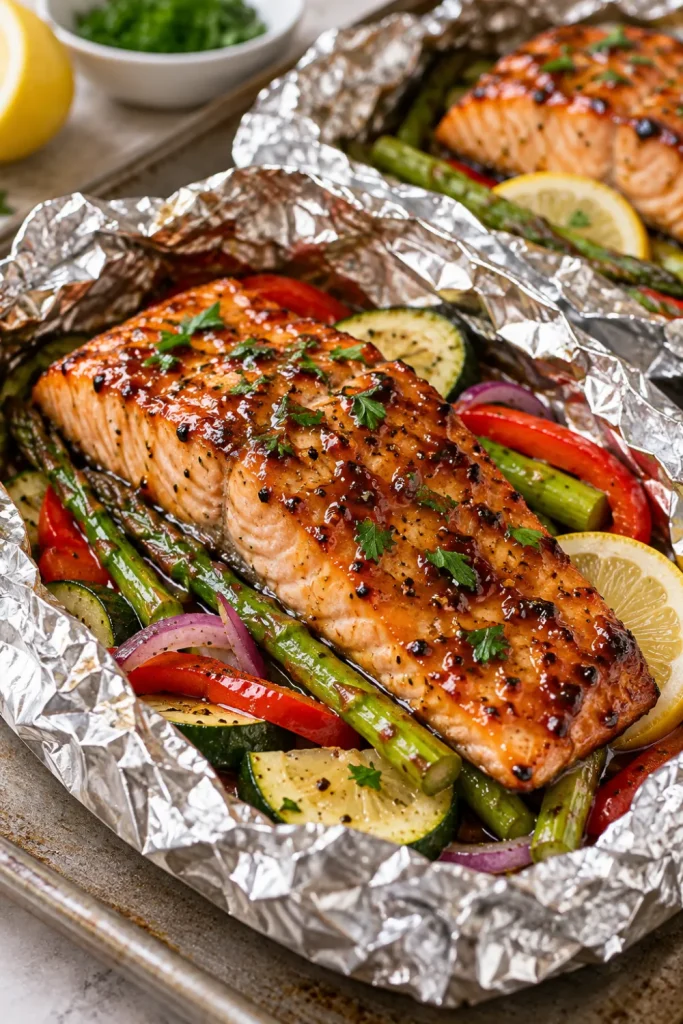
Ingredients for Honey Glazed Salmon Foil Packets
This recipe uses simple ingredients that are easy to find at most grocery stores. Fresh salmon and a homemade honey glaze are the stars of the dish.
For the Salmon
- 4 salmon fillets, approximately 5 to 6 ounces each
- 1 tablespoon olive oil
- 1/2 teaspoon salt, or to taste
- 1/4 teaspoon freshly ground black pepper
- 1 lemon, thinly sliced
- 2 tablespoons chopped fresh parsley, for garnish
- Heavy-duty aluminum foil, for wrapping
For the Honey Garlic Glaze
- 3 tablespoons honey
- 2 tablespoons soy sauce
- 3 cloves garlic, minced
- 1 tablespoon fresh lemon juice
- 1 tablespoon melted butter
- 1/2 teaspoon paprika
- 1/4 teaspoon red pepper flakes, optional
Optional Vegetables
You can add vegetables to the foil packets for extra flavor and color.
- 1 cup thinly sliced zucchini
- 1 cup thinly sliced bell peppers
- 1 cup trimmed asparagus pieces
- 1 teaspoon olive oil
- A pinch of salt and black pepper
Cut vegetables into thin, evenly sized pieces so they cook more quickly. Firmer vegetables may need to be partially cooked before adding them to the packets.
Equipment Needed
Gather the following kitchen equipment before you begin:
- Baking sheet: Supports the foil packets and makes them easier to move in and out of the oven.
- Aluminum foil: Heavy-duty foil is ideal for creating secure packets that hold the glaze and cooking juices.
- Small mixing bowl: Used to prepare the honey garlic glaze.
- Whisk or fork: Helps combine the glaze ingredients evenly.
- Measuring spoons: Ensures accurate ingredient measurements.
- Chef’s knife: Used to mince the garlic and slice the lemon and vegetables.
- Cutting board: Provides a safe surface for preparing ingredients.
- Pastry brush or spoon: Helps spread the glaze over the salmon fillets.
- Tongs or a spatula: Useful for handling the cooked packets.
- Instant-read thermometer: Helps check that the salmon has reached a safe internal temperature.
How to Make Honey Glazed Salmon Foil Packets
Follow these simple steps to make perfectly tender salmon coated in a delicious honey garlic glaze.
Step 1: Preheat the Oven and Prepare the Foil
Preheat your oven to 400°F (200°C).
Cut four large pieces of heavy-duty aluminum foil, approximately 12 to 14 inches long each. Each piece should be large enough to hold one salmon fillet and allow you to fold the edges securely.
Lightly brush the center of each foil sheet with olive oil to help prevent the fish from sticking.
If you plan to include vegetables, arrange a small portion in the center of each foil sheet. Drizzle the vegetables with a little olive oil and season lightly with salt and black pepper.
Step 2: Prepare the Honey Garlic Glaze
In a small mixing bowl, combine the honey, soy sauce, minced garlic, fresh lemon juice, melted butter, paprika, and red pepper flakes if using.
Whisk the ingredients until the honey is incorporated and the mixture looks smooth.
Taste a small amount of the glaze and adjust it according to your preference. Add a little more lemon juice for brightness or a small amount of honey for extra sweetness.
Set aside a small portion of the glaze for serving later, if desired. Keep any reserved sauce separate from the sauce used on raw fish.
Step 3: Season the Salmon
Pat the salmon fillets dry with paper towels. Removing excess moisture helps the glaze cling to the fish.
Place one salmon fillet in the center of each prepared foil sheet. Season the fillets evenly with salt and freshly ground black pepper.
If the fillets have skin, you can leave it on. The skin helps hold the fish together during cooking and can be removed easily after baking.
Arrange one or two lemon slices over each fillet for extra citrus flavor.
Step 4: Add the Honey Glaze
Spoon the honey garlic mixture evenly over the four salmon fillets. Use a pastry brush or the back of a spoon to coat the tops and sides.
Make sure each fillet receives some minced garlic and glaze. The honey adds sweetness, while the soy sauce contributes savory depth and the lemon juice balances the richness of the salmon.
If you added vegetables, drizzle a little of the glaze over them as well.
Avoid adding too much liquid to the packets, as the salmon will release some of its own juices while cooking.
Step 5: Seal the Foil Packets
Bring the long sides of each foil sheet together above the salmon. Fold them over two or three times to create a secure seal.
Tasty and Delicious Recipes: Air Fryer Cookbook: 600 Effortless Air Fryer Recipes for Beginners and Advanced Users
Fold the shorter ends inward to close the packet. Leave a little room inside for steam to circulate rather than wrapping the foil tightly against the fish.
Place the packets seam-side up on a baking sheet.
Properly sealed packets help retain moisture and prevent the glaze and cooking juices from leaking onto the baking sheet.
Step 6: Bake the Salmon
Transfer the baking sheet to the preheated oven and bake for approximately 15 to 20 minutes, depending on the thickness of the salmon fillets.
Thinner fillets may cook sooner, while thicker pieces may need additional time.
To check for doneness, carefully open one packet away from your face because hot steam will escape. The salmon should be opaque and flake easily with a fork.
For food safety, check the thickest part with an instant-read thermometer. The USDA recommends cooking fish to an internal temperature of 145°F (63°C).
If the salmon has not reached the recommended temperature, reseal the packet and continue cooking for a few more minutes before checking again.
Step 7: Finish and Serve
Once the salmon is cooked, carefully open the foil packets. Allow the steam to escape before handling the fish.
Spoon some of the flavorful cooking juices over each fillet. Garnish with freshly chopped parsley and additional lemon wedges.
For a slightly more caramelized finish, you can carefully transfer the cooked salmon to a baking dish and broil it briefly for 1 to 2 minutes. Watch it closely because the honey glaze can burn quickly.
Serve immediately with rice, roasted potatoes, steamed vegetables, or a fresh green salad.
Tips for the Best Honey Glazed Salmon Foil Packets
Choose Salmon Fillets of Similar Thickness
Try to use fillets that are similar in size and thickness. This helps all four portions cook at approximately the same rate and reduces the chance of some pieces becoming dry while others remain undercooked.
Do Not Overcook the Salmon
Salmon cooks relatively quickly, and overcooking can make it dry. Begin checking thinner fillets around the 12 to 15-minute mark, then continue cooking as needed.
The exact time will depend on the thickness of the fish, the oven, and whether the salmon is chilled or at room temperature.
Use Heavy-Duty Foil
Heavy-duty aluminum foil is less likely to tear when you seal or move the packets. If you only have regular foil, use two layers to help prevent leaks.
Balance the Sweetness
Honey gives the glaze its signature sweetness, but the lemon juice and garlic help balance it. If you prefer a less sweet sauce, reduce the honey slightly and add a little extra lemon juice.
Add Vegetables Carefully
Asparagus, zucchini, and thinly sliced bell peppers work well in salmon packets. Cut them into small, even pieces so they cook in roughly the same amount of time as the fish.
Dense vegetables such as potatoes and carrots generally require a longer cooking time, so cook them partially before adding them to the packets.
Be Careful When Opening the Packets
Hot steam builds up inside the foil while the salmon cooks. Open the packets slowly and keep your hands and face away from the escaping steam.
Variations to Try
One of the best things about honey glazed salmon foil packets is how easily you can change the flavors.
Honey Garlic Butter Salmon
For a richer flavor, increase the melted butter to 1 1/2 tablespoons. The butter blends with the honey and garlic to create a silky sauce that tastes wonderful over rice or mashed potatoes.
Spicy Honey Salmon
Add 1/2 teaspoon of red pepper flakes or a small amount of sriracha to the glaze. The heat contrasts nicely with the honey’s sweetness.
Lemon Herb Salmon
Add chopped fresh dill, parsley, or thyme to the glaze. Increase the lemon zest for a brighter citrus flavor that complements the salmon.
Honey Dijon Salmon
Whisk 1 teaspoon of Dijon mustard into the glaze. It adds a gentle tang and gives the sauce a slightly more complex flavor.
Salmon with Vegetables
Place thinly sliced zucchini, bell peppers, or asparagus beneath each fillet. Season the vegetables lightly and drizzle them with a little of the honey garlic glaze before sealing the packets.
What to Serve with Honey Glazed Salmon
Honey glazed salmon pairs well with simple side dishes that complement its sweet and savory flavor.
- Steamed rice: White rice, brown rice, or jasmine rice absorbs the delicious honey garlic sauce.
- Roasted potatoes: Crispy potatoes add a satisfying texture to the meal.
- Steamed asparagus: A fresh vegetable side keeps the meal light and colorful.
- Garlic green beans: Their savory flavor balances the sweetness of the glaze.
- Fresh green salad: Mixed greens with a lemon vinaigrette provide a refreshing contrast.
- Quinoa: A nutritious grain that works well with the salmon and its cooking juices.
- Mashed potatoes: Creamy potatoes make the dish feel comforting and filling.
For a complete dinner, serve each salmon fillet with rice and a green vegetable. You can also spoon the remaining cooking juices over the sides for extra flavor.
Storage and Reheating Instructions
How to Store Leftover Salmon
Allow the cooked salmon to cool slightly, then transfer it to an airtight container. Refrigerate within two hours of cooking.
Store leftover salmon in the refrigerator for up to 3 to 4 days. Keep it separate from uncooked fish and other raw ingredients.
How to Reheat Salmon
For the best texture, reheat the salmon in an oven set to 275°F (135°C). Place it in an oven-safe dish with a spoonful of water or reserved cooking juices, cover loosely, and heat until it reaches 165°F (74°C).
You can also reheat it in the microwave using short intervals at medium power. Cover the dish loosely to retain moisture and avoid overheating, which can make the fish dry.
Can You Freeze Honey Glazed Salmon?
Yes. Cooked salmon can be frozen in a freezer-safe, airtight container for approximately 2 to 3 months for best quality.
Allow it to cool, package it promptly, and label the container with the date. Thaw frozen salmon in the refrigerator before reheating.
The texture may be slightly softer after freezing, but it can still be delicious in rice bowls, salads, or wraps.
Nutrition Information
The following nutrition information is an estimate for one salmon foil packet made with the salmon and honey garlic glaze, without optional vegetables. Actual values will vary depending on the size and fat content of the salmon, the specific ingredients used, and how much glaze is consumed.
| Nutrient | Approximate amount per serving |
|---|---|
| Calories | 390 kcal |
| Protein | 35 g |
| Total Fat | 23 g |
| Saturated Fat | 6 g |
| Carbohydrates | 12 g |
| Sugars | 11 g |
| Fiber | 0 g |
| Sodium | 500 mg |
| Cholesterol | 95 mg |
Salmon is a source of high-quality protein and omega-3 fatty acids. The honey provides sweetness, while the garlic, lemon, and seasonings add flavor without requiring a complicated sauce.
For a more accurate nutrition calculation, use the ingredient labels and the exact weights of the ingredients you prepare.
Frequently Asked Questions
1. Can I use frozen salmon for foil packets?
Yes, but thawing the salmon in the refrigerator before cooking is recommended for more even results. Pat the thawed fillets dry before adding the seasoning and glaze. If cooking from frozen, expect a longer cooking time and check the thickest part with a thermometer to confirm it reaches 145°F (63°C).
2. How long should I bake honey glazed salmon foil packets?
At 400°F (200°C), most 5 to 6-ounce salmon fillets take approximately 15 to 20 minutes. Thicker fillets may require more time, while thinner pieces may cook sooner. Always check the internal temperature rather than relying on time alone.
3. Can I grill honey glazed salmon foil packets?
Yes. Preheat the grill to medium heat, approximately 375°F to 400°F (190°C to 200°C). Place the sealed packets on the grill and cook for around 12 to 18 minutes, depending on the thickness of the fish and the heat of the grill. Check that the salmon reaches 145°F (63°C) before serving.
4. Should I remove the salmon skin before cooking?
No. You can leave the skin on because it helps the fillet hold its shape and can be removed easily after cooking. If you prefer skinless salmon, that works too. The recipe does not require any changes.
5. Can I prepare the foil packets ahead of time?
You can prepare the glaze, slice the vegetables, and portion the salmon in advance. For the best quality, assemble the packets shortly before cooking. If you assemble them ahead, refrigerate them promptly and cook them within a short preparation window. Do not leave raw salmon at room temperature.
6. What vegetables work best in salmon foil packets?
Asparagus, zucchini, bell peppers, thinly sliced onions, and cherry tomatoes are good options. They cook relatively quickly and pair well with the honey garlic glaze. Cut them into small, even pieces to help them cook evenly.
7. How do I keep salmon from drying out?
Avoid overcooking the fish, use a flavorful glaze, and seal the foil packets properly to retain moisture. Begin checking for doneness early, especially if your fillets are thin. Remove the salmon from the heat once it reaches the recommended safe temperature.
8. Can I make this recipe without soy sauce?
Yes. You can replace the soy sauce with coconut aminos for a similar sweet and savory flavor. If you need a gluten-free dish, choose a certified gluten-free soy sauce or tamari and check the labels on all other ingredients.
9. Is honey glazed salmon healthy?
Honey glazed salmon can be part of a balanced diet. Salmon provides protein and omega-3 fatty acids, while the homemade glaze adds sweetness and flavor. To reduce added sugar, use less honey and serve the salmon with vegetables and whole grains.
10. Can I make honey glazed salmon foil packets without butter?
Yes. Replace the butter with olive oil in an equal amount. The glaze will still taste delicious, and the olive oil will help keep the sauce smooth and flavorful.
11. How do I know when salmon is done cooking?
The most reliable method is to use an instant-read thermometer inserted into the thickest part of the fillet. Fish should reach an internal temperature of 145°F (63°C), according to USDA guidance. Properly cooked salmon should also appear opaque and separate into flakes when gently tested with a fork.
12. Can I use this honey garlic glaze for other types of fish?
Absolutely. The glaze works well with cod, trout, tilapia, and other mild-flavored fish. Cooking times will vary depending on the thickness and type of fish, so check for doneness with a thermometer.