
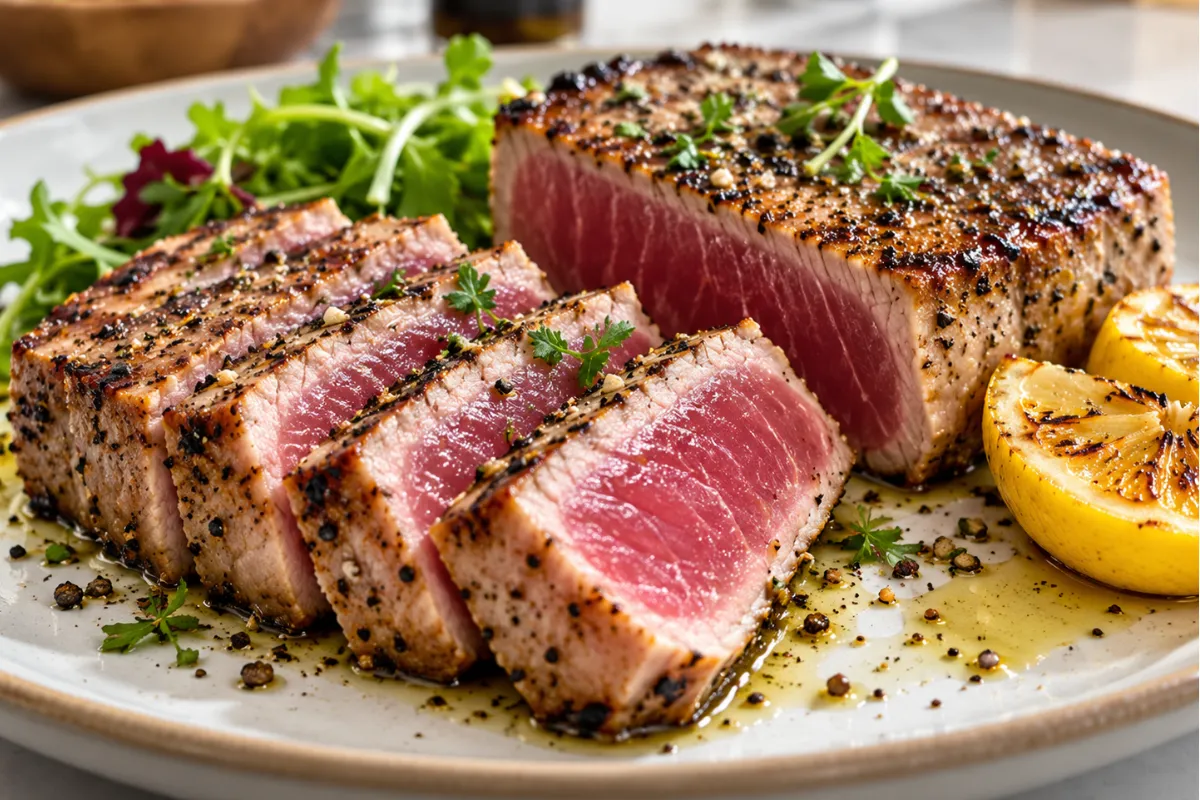
If you love seafood that is fresh, flavorful, and easy to prepare, this seared tuna steaks recipe is one to add to your regular meal rotation. It features thick tuna steaks seasoned with simple ingredients, seared in a hot pan until beautifully golden on the outside, and left tender and juicy in the center.
The best part is that you do not need complicated ingredients or special cooking skills to make this dish. A little olive oil, garlic, lemon juice, and a few pantry seasonings are enough to bring out the natural flavor of the tuna. The quick cooking method makes it ideal for busy weeknights, special dinners, or whenever you want a seafood meal that feels a little more special.
Serve these seared tuna steaks with roasted vegetables, steamed rice, a fresh salad, or your favorite dipping sauce for a satisfying meal. Whether you are cooking tuna for the first time or already enjoy seafood recipes, this simple method will help you prepare a delicious dish at home.
Recipe Information
- Recipe Name: Seared Tuna Steaks
- Preparation Time: 10 minutes
- Cooking Time: 4 to 6 minutes
- Total Time: 14 to 16 minutes
- Servings: 2 people
- Cuisine: Mediterranean-inspired
- Course: Main Course
- Cooking Method: Pan-searing
- Difficulty Level: Easy
Why This Seared Tuna Steaks Recipe Is Good
This recipe is quick, simple, and full of fresh flavor. The hot pan creates a lightly crisp, golden crust while the center stays tender when cooked to your preferred doneness. Lemon juice adds brightness, garlic provides savory flavor, and a small amount of olive oil helps the tuna sear beautifully. It is also easy to customize with your favorite herbs, spices, or sauces.

Equipment Needed
You only need a few basic kitchen tools to prepare this recipe.
- Heavy skillet or cast-iron pan: Helps create an even, flavorful sear.
- Paper towels: Essential for drying the tuna steaks before cooking.
- Tongs or a fish spatula: Makes turning the steaks easier without breaking them.
- Small mixing bowl: For combining the seasonings and olive oil.
- Measuring spoons: For measuring the oil, lemon juice, and seasonings.
- Instant-read food thermometer: Helps you check the internal temperature for food safety.
- Cutting board: Provides a clean surface for preparing the tuna and lemon.
- Sharp knife: For cutting the lemon and slicing the cooked tuna if desired.
Ingredients for Seared Tuna Steaks
This recipe uses simple ingredients that complement the natural taste of tuna without overpowering it.
Main Ingredients
- 2 tuna steaks, approximately 6 ounces (170 g) each and 1 inch thick
- 1 tablespoon olive oil
- 2 cloves garlic, minced
- 1 tablespoon fresh lemon juice
- 1 teaspoon soy sauce
- 1/2 teaspoon salt, or to taste
- 1/4 teaspoon freshly ground black pepper
- 1/2 teaspoon paprika
- 1/2 teaspoon dried oregano
- 1 teaspoon sesame seeds, optional
- Fresh parsley or chopped spring onions for garnish
- Lemon wedges for serving
Ingredient tip: Choose tuna steaks that are fresh or properly thawed, firm, and evenly thick. Yellowfin and bigeye tuna are commonly used for searing. If using frozen tuna, thaw it safely in the refrigerator before cooking.
How to Make Seared Tuna Steaks
Follow these simple steps to make flavorful tuna steaks with a beautiful seared exterior.
Step 1: Prepare the Tuna Steaks
Remove the tuna steaks from the refrigerator and pat them thoroughly dry with paper towels. Removing excess moisture is important because wet tuna tends to steam instead of developing a golden crust.
Place the steaks on a clean cutting board and check that they are roughly the same thickness. This helps them cook more evenly.
Step 2: Season the Tuna
In a small bowl, combine the olive oil, minced garlic, lemon juice, soy sauce, salt, black pepper, paprika, and dried oregano.
Brush the mixture over both sides of the tuna steaks. Let them sit for about 5 minutes while you heat the pan.
Avoid leaving the tuna in the lemon juice for too long before cooking, as the acid can begin to change the texture of the fish.
Step 3: Heat the Skillet
Place a heavy skillet or cast-iron pan over medium-high heat. Allow it to become properly hot before adding the tuna.
A hot pan is the key to a good sear. If the pan is not hot enough, the tuna may release moisture and cook without developing a flavorful crust.
Add a small amount of additional oil if your skillet needs it. The surface should be lightly coated, not swimming in oil.
Step 4: Sear the First Side
Carefully place the seasoned tuna steaks in the hot skillet. You should hear a gentle sizzle when they touch the pan.
Cook for approximately 2 to 3 minutes on the first side, depending on the thickness of the steaks and your desired doneness.
Avoid moving the fish around while it cooks. Leaving it undisturbed helps develop an even, golden-brown surface.
Step 5: Flip and Cook the Other Side
Use tongs or a fish spatula to flip each steak carefully. Sear the second side for another 2 to 3 minutes.
For thicker steaks, you may need additional cooking time. If you prefer the tuna more thoroughly cooked, continue cooking until it reaches a safe internal temperature of 145°F (63°C), measured with a food thermometer.
The cooking time will vary with steak thickness, pan temperature, and starting temperature, so use a thermometer rather than relying on timing alone.
Step 6: Check the Doneness
Check the thickest part of each tuna steak with an instant-read food thermometer. For food safety, the USDA recommends cooking fish to an internal temperature of 145°F (63°C).
Some restaurant-style tuna recipes are served rare or medium-rare, but partially cooked tuna may carry food-safety risks. If you choose a less-cooked center, understand that it does not meet the standard recommended internal temperature. Pregnant people, young children, older adults, and people with weakened immune systems should avoid undercooked fish.
Step 7: Rest and Garnish
Transfer the cooked tuna steaks to a clean plate and allow them to rest for about 2 minutes.
Tasty and Delicious Recipes: Air Fryer Cookbook: 600 Effortless Air Fryer Recipes for Beginners and Advanced Users
Sprinkle with sesame seeds, fresh parsley, or chopped spring onions if desired. Finish with a squeeze of fresh lemon juice just before serving.
If you want to slice the tuna, use a sharp knife and cut across the grain for a tender bite.
Step 8: Serve and Enjoy
Serve the tuna steaks immediately while they are warm. Pair them with rice, roasted potatoes, steamed vegetables, or a crisp green salad.
You can also drizzle a little extra lemon juice over the top or serve the fish with a light garlic yogurt sauce, soy-ginger dressing, or herb vinaigrette.
Tips for Perfect Seared Tuna Steaks
A few small details can make a noticeable difference in the final result.
- Dry the tuna thoroughly: Removing surface moisture helps create a better crust.
- Use a hot skillet: Preheating the pan prevents the fish from sticking and helps it sear quickly.
- Choose evenly thick steaks: Similar thickness makes it easier to cook both portions consistently.
- Do not overcrowd the pan: Leave space between the steaks so the pan stays hot.
- Use lemon at the right time: Add a little before cooking for flavor, then finish with fresh lemon after cooking.
- Watch the cooking time: Tuna can become dry and firm if overcooked, so check the internal temperature and adjust the cooking method to your preference.
- Season just before cooking: This keeps the preparation simple and avoids unnecessarily drawing moisture from the fish.
What to Serve with Seared Tuna Steaks
These tuna steaks pair well with a variety of sides, making the recipe suitable for both quick lunches and elegant dinners.
1. Steamed Rice
Plain steamed rice, brown rice, or lemon rice provides a mild base that allows the tuna’s flavor to stand out.
2. Roasted Vegetables
Roasted broccoli, asparagus, zucchini, bell peppers, and carrots add color, texture, and a little sweetness to the meal.
3. Fresh Green Salad
A salad made with lettuce, cucumber, cherry tomatoes, red onion, and a light lemon dressing keeps the meal fresh and balanced.
4. Roasted or Mashed Potatoes
Potatoes make the meal more filling and pair well with garlic, olive oil, and herbs.
5. Garlic Yogurt Sauce
Mix plain yogurt with minced garlic, lemon juice, chopped herbs, and a pinch of salt for a cool, creamy sauce that complements the seared tuna.
Recipe Variations
You can easily change the flavor of this recipe depending on your preferences.
Spicy Seared Tuna Steaks: Add chili flakes, cayenne pepper, or a little hot sauce to the seasoning mixture.
Sesame-Crusted Tuna Steaks: Coat the outer surfaces with white and black sesame seeds before placing the steaks in the hot pan. Press gently so the seeds adhere.
Lemon Herb Tuna Steaks: Replace the paprika and soy sauce with fresh parsley, thyme, and a little extra lemon zest.
Asian-Inspired Tuna Steaks: Use soy sauce, fresh ginger, sesame oil, and a small amount of honey for a sweet and savory variation.
Garlic Butter Tuna Steaks: Add a small amount of butter during the final moments of cooking and spoon the melted butter over the fish. Keep the heat moderate enough to prevent the garlic from burning.
How to Store Leftover Seared Tuna Steaks
If you have leftover tuna steaks, allow them to cool briefly and place them in an airtight container. Refrigerate promptly, within 2 hours of cooking, or within 1 hour if the surrounding temperature is above 90°F (32°C).
Cooked tuna can generally be refrigerated for 3 to 4 days when stored properly.
To reheat, use a skillet over low heat with a small amount of olive oil. Warm the fish gently until heated through, taking care not to dry it out. You can also enjoy leftover tuna cold in salads or sandwiches, provided it has been stored safely.
For the best texture and flavor, serve freshly cooked tuna whenever possible.
Nutrition Information
The following nutrition table provides approximate values for one serving, assuming the recipe makes two servings and includes the listed ingredients in the amounts specified.
| Nutrient | Approximate Amount per Serving |
|---|---|
| Calories | 250 kcal |
| Protein | 40 g |
| Total Fat | 8 g |
| Saturated Fat | 1.5 g |
| Carbohydrates | 2 g |
| Dietary Fiber | 0.5 g |
| Total Sugars | 0.5 g |
| Sodium | 600 mg |
| Cholesterol | 65 mg |
Nutrition disclaimer: These values are estimates and may vary according to the type of tuna, the exact weight of each steak, the amount of oil used, and the sodium content of the soy sauce. Actual nutrition values will differ between brands and preparation methods.
Frequently Asked Questions
1. How long should I sear tuna steaks?
For tuna steaks approximately 1 inch thick, start with 2 to 3 minutes per side in a properly heated skillet. The exact time depends on the thickness, pan temperature, and desired doneness. Use a food thermometer to verify that the fish reaches 145°F (63°C) for the recommended food-safe internal temperature.
2. Should tuna steaks be cooked all the way through?
For food safety, fish should reach an internal temperature of 145°F (63°C). Tuna is sometimes served with a rare or medium-rare center, but that preparation does not meet the standard recommended temperature and carries additional food-safety risks.
3. What is the best type of tuna for searing?
Yellowfin tuna is a popular choice because it has a firm texture and a relatively mild flavor. Bigeye tuna is another option. Choose steaks that are evenly cut and suitable for cooking, and purchase seafood from a reputable supplier.
4. Can I use frozen tuna steaks?
Yes. Frozen tuna steaks work well when properly thawed in the refrigerator. Pat them dry before seasoning and cooking. Avoid placing frozen tuna directly into a hot skillet unless the product instructions specifically recommend cooking from frozen.
5. Do I need to marinate tuna before searing?
No. A short seasoning period of around 5 minutes is enough for this recipe. Tuna has a naturally distinctive flavor, so a simple mixture of olive oil, garlic, lemon, and herbs works well without a lengthy marinade.
6. Why are my seared tuna steaks dry?
Tuna can become dry when it is cooked for too long. Thin steaks cook especially quickly. Use evenly thick cuts, preheat the skillet, and check the internal temperature as you cook. Cooking fish thoroughly while avoiding unnecessary extra cooking time helps preserve its texture.
7. Can I make this recipe without soy sauce?
Yes. Simply omit the soy sauce and season with a little extra lemon juice, black pepper, garlic, and herbs. If you want a similar savory flavor, you can use a small amount of a suitable alternative seasoning.
8. Can I cook tuna steaks on a grill?
Absolutely. Preheat a clean, lightly oiled grill to medium-high heat. Place the seasoned tuna steaks on the grill and cook for a few minutes per side, adjusting the time according to thickness and checking the internal temperature with a food thermometer.
9. What sauce goes well with seared tuna steaks?
Lemon garlic butter, garlic yogurt sauce, soy-ginger dressing, and herb vinaigrette all pair nicely with tuna. Choose a light sauce that complements the fish without overwhelming its natural flavor.
10. Can I prepare the seasoning ahead of time?
Yes. You can mix the dry seasonings and prepare the garlic in advance. For the best flavor and texture, season the tuna shortly before cooking rather than leaving it in an acidic marinade for an extended period.