
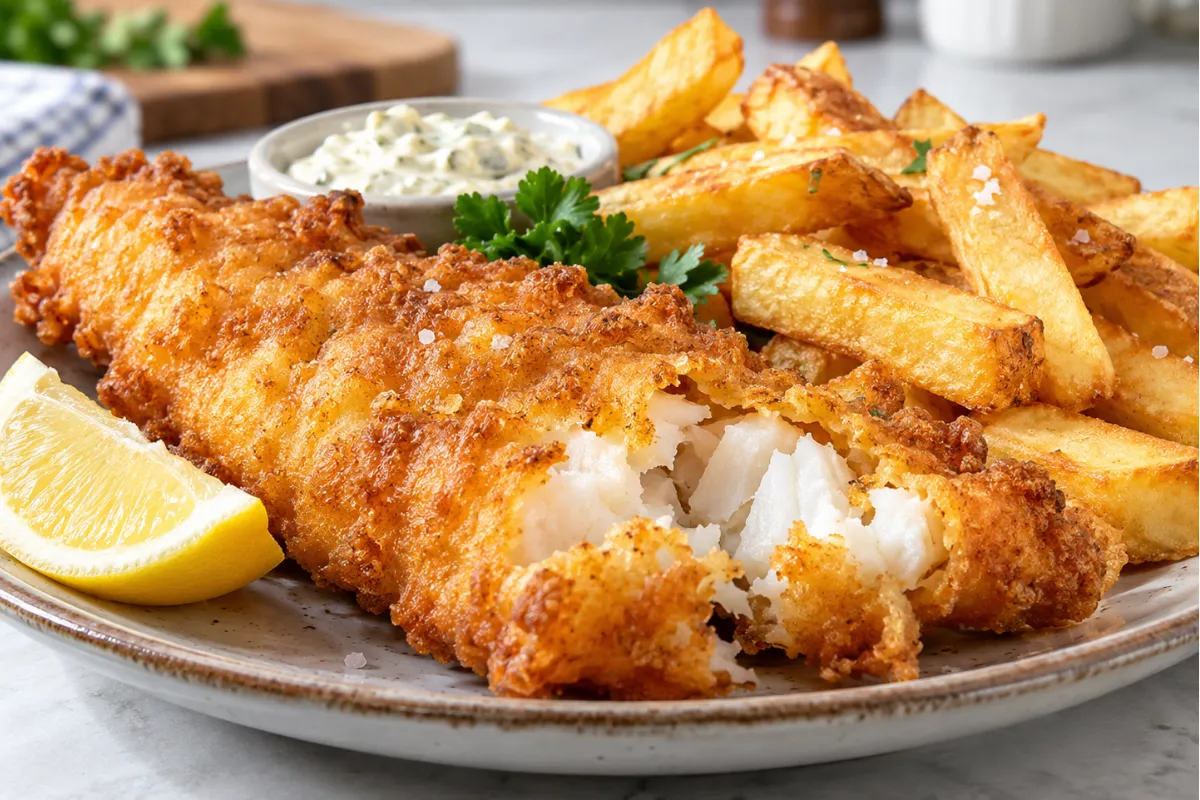
There is something special about biting into a piece of freshly fried fish coated in a light, crispy batter, especially when it is served with golden homemade chips. This classic British comfort food is loved for its crunchy exterior, tender fish, and satisfying combination of flavors. The good news is that you do not need to visit a restaurant to enjoy it. With a few simple ingredients and the right frying technique, you can make delicious beer battered fish and chips right in your own kitchen.
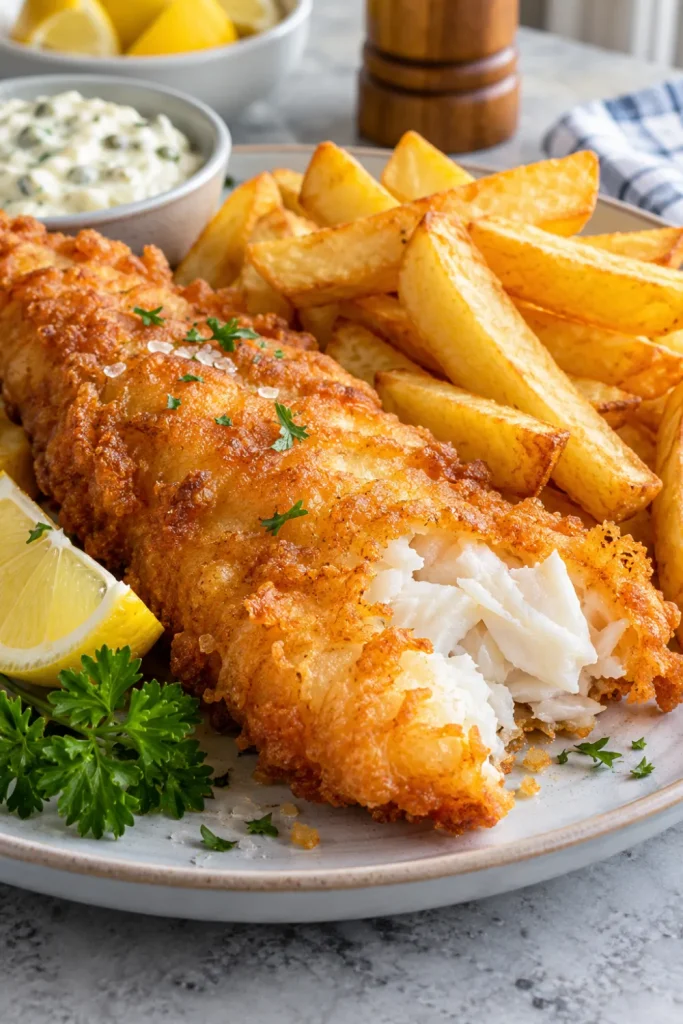
This beer battered fish and chips recipe features flaky white fish covered in a flavorful beer batter and fried until beautifully golden. The beer adds lightness to the batter, while cold liquid and properly heated oil help create that signature crispy texture. Paired with thick-cut potato chips, lemon wedges, and tartar sauce, this dish makes a wonderful meal for family dinners, weekend treats, or casual gatherings.
Recipe Information
- Recipe Name: Beer Battered Fish and Chips
- Cuisine: British
- Course: Main Course
- Preparation Time: 25 minutes
- Cooking Time: 30 minutes
- Total Time: 55 minutes
- Servings: 4 people
- Yield: 4 fish fillets with homemade chips
- Cooking Method: Deep frying
- Difficulty Level: Medium
Why You Will Love This Recipe
This recipe delivers crispy, golden fish with a tender, flaky center and homemade chips that make every bite satisfying. The beer batter is simple to prepare, and its light texture gives the fish a delicious crunch. It uses easy-to-find ingredients and brings classic pub-style comfort food to your home without complicated cooking techniques.
Equipment Needed
Before you begin, gather the following kitchen equipment to make the cooking process easier and safer.
- Deep, heavy-bottomed pot or Dutch oven: For heating the oil and frying the fish.
- Deep-fry thermometer: To monitor the oil temperature accurately.
- Large mixing bowl: For preparing the beer batter.
- Whisk: To combine the batter ingredients smoothly.
- Sharp knife: For cutting the potatoes and fish.
- Cutting board: For preparing the ingredients.
- Peeler: For peeling the potatoes if desired.
- Slotted spoon or kitchen spider: For lifting the fried fish and chips from the oil.
- Wire rack: For draining excess oil while keeping the coating crisp.
- Paper towels: For absorbing excess moisture from the ingredients before frying.
- Measuring cups and spoons: For measuring the ingredients.
- Large plate or serving platter: For serving the finished fish and chips.
Ingredients for Beer Battered Fish and Chips
The ingredients are divided into three sections so you can prepare the fish, batter, and chips separately.
For the Fish
- 4 white fish fillets, about 150 to 180 grams each
- 1/2 teaspoon salt, or to taste
- 1/4 teaspoon black pepper
- 1/2 cup all-purpose flour, for dusting the fish
- 1 tablespoon lemon juice, optional
Cod and haddock are traditional choices for fish and chips. You can also use pollock or another firm, mild white fish that holds its shape during frying. Choose fillets of similar thickness so they cook evenly.
For the Beer Batter
- 1 cup all-purpose flour
- 1/2 cup cornstarch
- 1 teaspoon baking powder
- 1 teaspoon salt
- 1/2 teaspoon paprika, optional
- 1/4 teaspoon black pepper
- 1 cup cold beer, approximately
- Vegetable oil, for deep frying
A light lager is an excellent choice because it adds a subtle malty flavor without overpowering the fish. Pale ale can also work if you prefer a slightly more pronounced flavor. Use cold beer straight from the refrigerator for the best results.
For the Homemade Chips
- 4 medium to large russet potatoes, or another floury potato variety
- Vegetable oil, for frying
- Salt, to taste
Russet potatoes are ideal because they develop a fluffy interior and a crisp exterior. If they are unavailable, choose potatoes suitable for frying.
For Serving
- Lemon wedges
- Tartar sauce
- Malt vinegar, optional
- Fresh parsley, optional
- Green peas or mushy peas, optional
How to Make Beer Battered Fish and Chips
Follow these step-by-step instructions to prepare crispy fish and golden chips at home.
Step 1: Prepare the Potatoes
Wash and peel the potatoes if desired. Cut them into thick, even strips, approximately 1/2 inch wide. Keeping the chips similar in size helps them cook evenly.
Place the cut potatoes in a large bowl of cold water and soak them for 20 to 30 minutes. This helps remove excess surface starch, which can improve crispness.
Drain the potatoes and rinse them under fresh water. Spread them on a clean kitchen towel and pat them thoroughly dry. Removing excess moisture is important because wet potatoes can cause oil to splatter.
Step 2: Prepare the Fish Fillets
Pat the fish fillets dry with paper towels. Removing surface moisture helps the batter stick better and prevents excess splattering during frying.
Check the fillets for any remaining bones and remove them carefully. Season both sides with salt and black pepper. Add a little lemon juice if desired, but avoid leaving the fish in the juice for too long.
Cut larger fillets into manageable portions if necessary. Keep the pieces relatively similar in thickness to ensure even cooking.
Step 3: Make the Beer Batter
In a large mixing bowl, combine the all-purpose flour, cornstarch, baking powder, salt, paprika, and black pepper.
Pour in the cold beer gradually while whisking gently. Add enough beer to create a smooth batter that is thick enough to coat the back of a spoon but still flows easily.
Avoid overmixing. A few small lumps are fine, and excessive mixing can develop gluten in the flour, making the coating less delicate.
Keep the batter cold while preparing the oil. For the crispiest result, make it shortly before frying.
Step 4: Heat the Oil
Pour vegetable oil into a deep, heavy-bottomed pot, leaving plenty of room at the top to prevent overflow. The oil should be deep enough to submerge the fish comfortably.
Heat the oil to approximately 325°F (163°C) for the first fry of the chips.
Use a thermometer to check the temperature. If the oil is too cool, the food can absorb excess oil. If it is too hot, the outside may brown before the inside cooks.
Never leave hot oil unattended, and keep water away from the pot.
Step 5: Fry the Chips for the First Time
Carefully add a small batch of dried potato strips to the hot oil. Avoid overcrowding the pot because adding too many potatoes at once can lower the oil temperature.
Fry for approximately 5 to 7 minutes, until the potatoes are softened but still pale. They should not become deeply golden at this stage.
Tasty and Delicious Recipes: Air Fryer Cookbook: 600 Effortless Air Fryer Recipes for Beginners and Advanced Users
Remove the chips with a slotted spoon and place them on a wire rack to drain. Repeat with the remaining potatoes.
Set the partially cooked chips aside while you prepare the fish.
Step 6: Dust the Fish with Flour
Place the 1/2 cup of all-purpose flour on a plate. Lightly coat each fish fillet with flour, shaking off any excess.
This thin layer helps the beer batter adhere to the fish instead of sliding off during frying.
Work with one fillet at a time so the coating remains even. Keep the prepared fish ready beside the bowl of batter.
Step 7: Coat the Fish in Beer Batter
Check that the beer batter is still cold and well combined. Dip one floured fish fillet into the batter, turning it gently to cover all sides.
Allow the excess batter to drip back into the bowl for a moment. The coating should cover the fish evenly without forming an excessively thick layer.
Carefully lower the battered fish into the hot oil. Lowering it gently and away from yourself helps reduce splashing.
Fry one or two pieces at a time, depending on the size of your pot. Avoid overcrowding, as this can make the coating soggy.
Step 8: Fry the Fish Until Golden
Increase or maintain the oil temperature at approximately 350°F (177°C). Fry the fish for around 5 to 8 minutes, depending on the thickness of the fillets.
Turn the pieces carefully if necessary so they cook evenly on all sides. The batter should become golden brown and crisp.
The fish is ready when the coating is crunchy and the center is opaque and flakes easily with a fork. For food safety, the internal temperature should reach 145°F (63°C).
Transfer the cooked fish to a wire rack to drain. Avoid stacking the fillets, as trapped steam can soften the crust.
Repeat with the remaining fish, allowing the oil to return to the correct temperature between batches.
Step 9: Fry the Chips for the Second Time
Once all the fish is cooked, increase the oil temperature to approximately 375°F (191°C).
Return the partially cooked chips to the oil in small batches. Fry for another 3 to 5 minutes, or until they are golden brown and crisp on the outside.
Keep an eye on the chips because thinner pieces may cook more quickly. Remove them with a slotted spoon and drain them on a wire rack.
Sprinkle with salt while they are still hot so the seasoning adheres well.
Step 10: Serve the Fish and Chips
Arrange the crispy fish fillets and golden chips on a serving platter or individual plates.
Serve immediately with lemon wedges, tartar sauce, and malt vinegar if desired. Green peas or mushy peas make a traditional accompaniment.
For the best experience, enjoy the fish as soon as it is cooked. The batter is at its crispiest when freshly fried, and the contrast between the crunchy coating and tender fish is what makes this classic dish so delicious.
Tips for the Best Beer Battered Fish and Chips
A few simple techniques can make a noticeable difference to the texture and flavor of your homemade fish and chips.
1. Use Cold Beer
Cold beer helps keep the batter temperature low before it hits the hot oil. This temperature contrast can help the coating set quickly and become crisp.
2. Dry the Fish Thoroughly
Excess moisture on the fish can prevent the batter from sticking properly. Always pat the fillets dry before seasoning and dusting them with flour.
3. Do Not Overmix the Batter
Mix just until the ingredients come together. Overmixing can produce a heavier coating instead of the light, crisp texture you want.
4. Maintain the Correct Oil Temperature
Oil temperature is one of the most important factors in this recipe. Use a thermometer whenever possible and let the oil return to temperature between batches.
5. Avoid Overcrowding the Pot
Frying too many pieces at once lowers the oil temperature and can result in greasy food. Cook in small batches for better results.
6. Drain on a Wire Rack
A wire rack allows air to circulate around the fried food. This helps prevent steam from collecting underneath and softening the crispy coating.
7. Choose Fish with a Firm Texture
Cod, haddock, and pollock are good choices because their flesh remains tender while holding together during frying. Avoid very thin pieces that may overcook quickly.
8. Serve Immediately
Fish and chips taste best when freshly prepared. If you need to hold a batch briefly, place it on a wire rack in a low oven rather than covering it tightly.
Common Mistakes to Avoid
Even a simple recipe can be affected by a few common mistakes. Here is how to avoid them.
- Using warm beer: Warm batter may not produce the same crisp texture. Keep the beer refrigerated until you are ready to mix.
- Skipping the flour coating: Without a light dusting of flour, the batter may slide off the fish.
- Adding wet potatoes to hot oil: Water causes dangerous splattering and interferes with frying. Dry the chips thoroughly.
- Frying at the wrong temperature: Oil that is too cool can make the coating greasy, while excessively hot oil can burn it.
- Making the batter too thick: A very thick batter can become heavy and overwhelm the fish. Add beer gradually until the consistency is right.
- Covering the fried food: Covering the fish traps steam and softens the crust.
- Leaving the fish in the oil too long: Overcooked fish can become dry. Check the thickest part for doneness rather than relying on color alone.
Variations to Try
Once you have mastered the classic recipe, you can experiment with a few simple variations.
Non-Alcoholic Beer Battered Fish
Replace regular beer with cold non-alcoholic beer. The carbonation can still help create a light batter, while the flavor remains mild and malty.
Spicy Beer Battered Fish
Add a pinch of cayenne pepper or extra paprika to the dry ingredients. This gives the coating a gentle heat without overpowering the fish.
Garlic and Herb Batter
Add a small amount of garlic powder and dried herbs to the flour mixture for a more aromatic coating.
Oven-Baked Chips
If you prefer to reduce the amount of oil used for the potatoes, toss the cut chips with a little oil and bake at 425°F (220°C) until golden, turning them halfway through. The texture will differ from traditional deep-fried chips, but they still make a tasty accompaniment.
Gluten-Free Version
Use a gluten-free all-purpose flour blend and certified gluten-free cornstarch. Choose a gluten-free beer or another suitable carbonated beverage. Check all product labels, and expect some differences in batter texture depending on the flour blend.
What to Serve with Beer Battered Fish and Chips
Beer battered fish and chips is a complete meal on its own, but the right accompaniments can make it even more enjoyable.
- Tartar sauce: Its creamy texture and tangy flavor complement the crispy fish.
- Lemon wedges: Fresh lemon adds brightness and balances the richness of the fried coating.
- Mushy peas: A traditional British side dish that adds color and a soft texture.
- Malt vinegar: A classic condiment that provides a sharp, tangy contrast to the potatoes.
- Coleslaw: A crunchy, refreshing side that pairs well with the warm fish.
- Garden salad: Fresh greens and a light dressing help balance the richness of the meal.
For a traditional pub-style presentation, serve the fish and chips with tartar sauce, lemon wedges, and a side of mushy peas.
How to Store and Reheat Leftovers
Fish and chips are best eaten fresh, but leftovers can be stored safely and reheated later.
Storing Leftovers
Allow the fish and chips to cool slightly, then refrigerate them in separate airtight containers within two hours of cooking. For food safety, use refrigerated leftovers within 3 to 4 days.
Separating the fish from the chips helps preserve their texture as much as possible.
Reheating in the Oven
Preheat the oven to 400°F (200°C). Place the fish and chips on a wire rack set over a baking tray and heat until hot throughout, usually around 8 to 15 minutes depending on thickness and quantity.
Check the center of the fish before serving. Reheat leftovers to an internal temperature of 165°F (74°C).
Reheating in an Air Fryer
Preheat the air fryer to approximately 350°F (175°C). Arrange the fish and chips in a single layer and heat for about 4 to 8 minutes, checking regularly.
The exact time depends on the size of the pieces and the appliance. Avoid overcrowding so hot air can circulate properly.
Can You Freeze Beer Battered Fish?
You can freeze cooked fish, although the batter may lose some crispness after thawing. Place cooled pieces in a freezer-safe container with baking paper between layers and freeze for up to 2 months for the best quality.
Reheat from frozen in an oven or air fryer until piping hot throughout. Do not thaw fish on the kitchen counter.
Nutrition Information
The following nutrition table provides an estimated value per serving, assuming the recipe makes four servings and includes one fish fillet with a portion of chips.
| Nutrient | Approximate Amount per Serving |
|---|---|
| Calories | 700 kcal |
| Total Fat | 32 g |
| Saturated Fat | 5 g |
| Carbohydrates | 72 g |
| Dietary Fiber | 6 g |
| Total Sugars | 3 g |
| Protein | 32 g |
| Cholesterol | 75 mg |
| Sodium | 850 mg |
Nutrition values are estimates and will vary according to the type of fish, amount of oil absorbed, portion sizes, beer used, and serving sauces. The values do not include optional sauces or additional salt at the table.
Frequently Asked Questions
1. What is the best beer for beer battered fish and chips?
A light lager is a great choice because it has a mild flavor and works well in a crisp batter. Pale ale is another option if you enjoy a slightly stronger malty taste. Choose a cold beer for the best results.
2. Can I make beer battered fish without alcohol?
Yes. You can substitute non-alcoholic beer for regular beer. A cold carbonated water can also work, although the flavor will be less malty. Remember that non-alcoholic beer may still contain trace amounts of alcohol, depending on the product.
3. Why is my beer batter not crispy?
A batter may turn out soft if the oil temperature is too low, the fish is wet, or the pot is overcrowded. Use cold batter, dry the fish well, and fry in small batches at the recommended temperature.
4. Which fish is best for this recipe?
Cod and haddock are traditional choices because they have a mild flavor and flaky texture. Pollock and other firm white fish also work well. Choose fresh or properly thawed fillets of similar thickness.
5. How do I keep the batter from falling off the fish?
Pat the fish dry and dust it lightly with flour before dipping it into the batter. Lower the coated fish gently into the hot oil and avoid moving it too much during the first minute of frying.
6. Can I prepare the beer batter ahead of time?
It is best to prepare the batter just before frying. The leavening reaction and the batter’s cold temperature are most useful when it is freshly mixed. You can measure the dry ingredients ahead of time and add the cold beer when you are ready to cook.
7. Can I use frozen fish fillets?
Yes, but thaw them completely in the refrigerator first. Drain any excess liquid and pat the fillets thoroughly dry before seasoning and coating them. Frying partially frozen fish can lead to uneven cooking and excess splattering.
8. What temperature should the oil be for frying fish?
A temperature of around 350°F (177°C) is a good starting point for frying battered fish. For the final fry of the chips, increase the temperature to around 375°F (191°C). Use a thermometer to maintain consistent heat.
9. Can I make fish and chips in an air fryer?
Yes, but the result will be different from traditional deep-fried fish. Wet beer batter can drip through an air fryer basket, so it is better to use a recipe specifically designed for air frying, often with a coating that sets more firmly. Traditional beer-battered fish generally achieves its characteristic texture through deep frying.